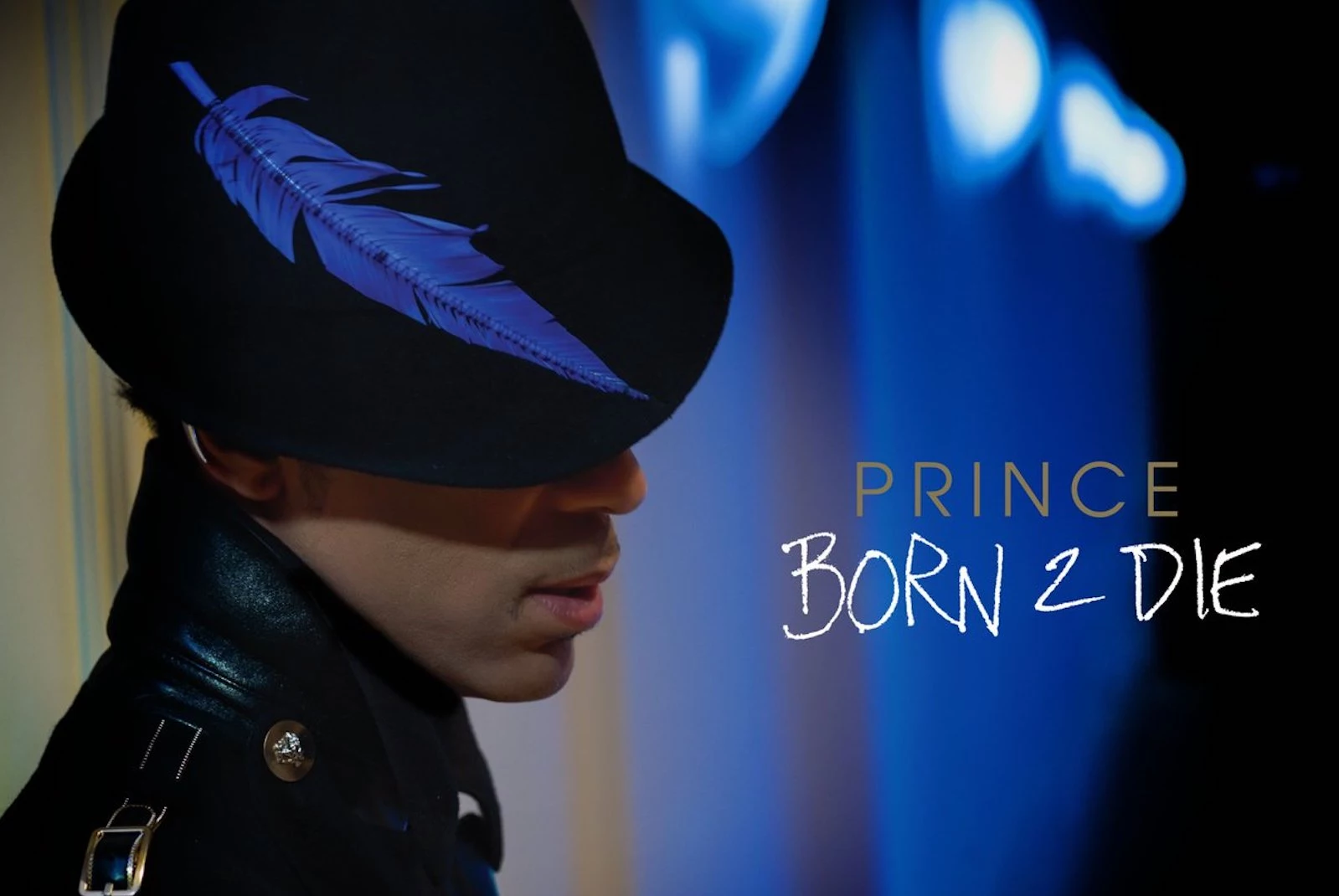
To mark the fifth anniversary of the release of Welcome 2 America (2021), Douglas Rasmussen reflects on the song “Born 2 Die” from the album. Written and recorded in 2010, it was shelved in the famous vault until 2021.
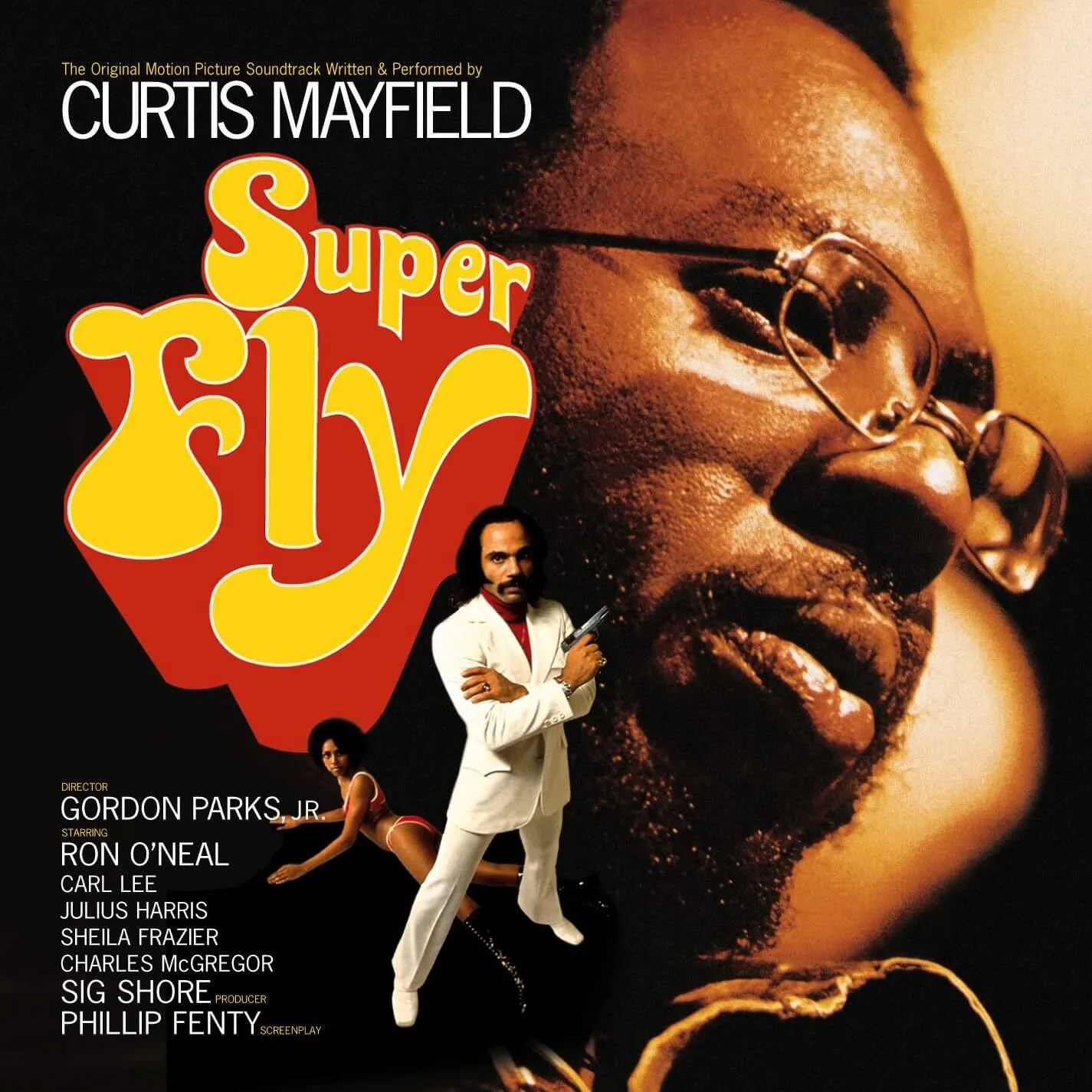
As Morris Hayes tells it, “Born 2 Die,” from the posthumously released album Welcome 2 America, had its impetus as essentially a challenge. Dr. Cornel West would say about Prince’s music, “I love my brother Prince, but he’s no Curtis Mayfield.” Prince being as competitive as he was, used the opportunity to write a song that would attempt to do Mayfield better than Mayfield. What Prince wrote was a retro-soul classic in the style of Curtis Mayfield, particularly that of the soundtrack Super Fly (1972), and owed both its sound and imagery to that soundtrack.
Prince being as competitive as he was, used the opportunity to write a song that would attempt to do Mayfield better than Mayfield.
— Douglas Rasmussen
Super Fly and the Blaxploitation Genre
Super Fly was a product of the blaxploitation film genre of the 1970s and was directed by Gordon Parks Jr. Made for a shoestring budget ($170,000), it ended up making nearly twenty million domestically. The film starred noted theater actor Ron O’Neal as Youngblood Priest, a drug dealer who wants to sell off the last of his cocaine, make a big score, and retire before the street life gets to him. Featuring scenes of junkies getting high, frequent drug use and references to cocaine and other illicit substances, as well as a number of action scenes, Super Fly was heavily criticized for its graphic depiction of drug use and for glamorizing drug culture and street life, drawing the ire of Junius Griffin, who was head of the Beverly Hills chapter of the NAACP (National Association for the Advancement of Colored People) during this time, who said, “We must insist that our children are not exposed to a steady diet of so-called Black movies that glorify Black males as pimps, dope pushers, gangsters, and super males.” Griffin then persisted in a censorship campaign to remove blaxploitation films from distribution.
This was a common criticism levied at blaxploitation films such as Shaft (1971), Sweet Sweetback’s Baadasssss Song (1971), Black Caesar (1973), Coffy (1973), and Truck Turner (1974), to name a few. The gritty depiction of street life, criminality, and in the case of Super Fly having an outlaw as the protagonist, inspired a fair bit of controversy. There was a debate as to whether the depiction of criminal activity in blaxploitation films, even if they were directed against corrupt white cops, was morally questionable or a form of empowerment. Some critics viewed the blaxploitation genre as glamorizing the most venal aspects of life, such as drugs and criminality. Ibram X Kendi takes a different approach, noting, “And yet, whenever these artists humanized pimps, gangsters, criminals, and prostitutes, they were at their antiracist best.” “Born 2 Die” follows more along the lines of this humanized antiracism than as an exploitative look at life in poverty.
Prince does not attempt to resolve this conflict, but instead relies on the iconography of blaxploitation films to portray a character in the song who is a prostitute, pimp, drug user, and criminal boss all in one. Blaxploitation films relied on R&B soundtracks from the likes of Bobby Womack, Isaac Hayes, Marvin Gaye, and the aforementioned Curtis Mayfield and infused nearly every scene in the respective movies with a funk or soul sound. It is these two elements that Prince blends together in a song that draws heavily from this 1970s aesthetic.
The Retro-Soul Sound
“Born 2 Die” is also significant because it employs a retro-soul sound rather than a synth- heavy sound or rock music sound prevalent in Prince’s music in the 1980s when he used equipment like the LM-1 drum machine or OB-XA synthesizer to capture the new wave and electronic pop sound. The retro-soul sound of “Born 2 Die” brings to mind Amiri Baraka’s views that rhythm and dance as being essential to the black aesthetic and a deeply ingrained characteristic of African descendants. Baraka characterized it as part of what he called, ‘the changing same,’ whereby black art forms such as jazz, R&B, soul, and blues exist along a continuum for the black community. Prince, then, is carrying on with this tradition by using music as a powerful political statement on the struggles afflicting modern America, in this case a black woman who is an addict and a prostitute. Kesha M. Morant also believes that black popular music is more than just simple entertainment, but that black musicians also serve as village griots and historians who are connecting the audience to the traditions of the past and to the spiritual and political concerns of African Americans. Prince, then, is akin to a postmodern griot using his voice to highlight the struggles black artists face in the modern music scene and using funk as a liberatory medium, using the iconography of blaxploitation to highlight social concerns with poverty and economic inequality.
Invoking the style of the 70s sound is important to Prince. As Prince would write in his posthumously published memoir, “Rhythm came from Africa. We need 2 stop frontin’ about that.” Music plays an essential part in Prince’s social awareness and forms one of the foundational pillars of equality. As C. Leigh McInnis mentions in his introduction to The Lyrics of Prince Rogers Nelson, “If it is true that black music is black history, then Prince is an irrefutable part of that history.” The lineage of black struggles and creativity can be traced through the albums of Prince. Olly Wilson’s essay “Black Music as an Art Form” establishes the importance of black music alongside the more revered forms of Eurocentric art forms (classical music, for example). Wilson first determines what can be considered black music, identifying that black music has influenced and is influenced by non-black musical forms, yet despite this branching out of forms, there is indeed a distinct set of qualities that express the collective cultural values of African Americans. Prince’s music, then, builds on this essence of black music with a diverse range of influences that extends beyond his own ethnicity without sacrificing those qualities of the black collective experience.
In “Born 2 Die” Prince returns to his R&B and funk roots without fear of having to be slotted into a genre by the record label and allocated lesser resources that affected his early career. Prince’s embrace of R&B and funk and his incorporation of those older styles of music into his famous Minneapolis sound (identified by heavy use of synthesizers and a new wave pop sound suffused with hard rock) is important for its cultural cache. R&B, soul, and funk music have connections to the sounds of protest. Artists such as James Brown, Curtis Mayfield, Fela Kuti, Sly and the Family Stone, Marvin Gaye, Stevie Wonder, and Parliament-Funkadelic are all examples of funk and soul musicians who have used the genres to explore issues surrounding contemporary life for African Americans. Prince continues in this tradition, but infusing new sounds and new techniques into these genres so as to reach a larger audience and preach his message of grassroots activism and to expand what was once a marginalized and niche market for musicians.
A Moral Parable
“Born 2 Die” uses the aesthetic of blaxploitation for its moral parable about “a bad girl / One hit and she gets you high.” Prince is using cultural expression to convey the effects of drugs and poverty on young African Americans because news coverage and sociology do not effectively relate the seriousness of economic inequality to the public. In order to do so, Prince has to rely on the blaxploitation aesthetic and the retro-soul sound of his musical predecessors to communicate the deleterious effects of two centuries of historical oppression. A treatise is not going to cut it, so Prince depicts the life of a prostitute and hustler who seems to be involved in a number of different criminal activities. Prince lays out her hustler lifestyle in the next verse:
She sells everything from A to Z
Anything just to keep her free
From the hustle of the streets
— Lyrics "Born 2 Die"
Much like how in Super Fly scenes of drug use and violent junkies populate the screen, in “Born 2 Die” Prince establishes early on the dangers of a criminal lifestyle. The source of the protagonist’s social malady is made apparent when Prince sings about the cause of the protagonist’s downfall:
She left church a long time ago
Said they couldn't teach what they didn't know
That's when she lost her virginity
Now she's pimping every bottle
From New York to L.A.
— Lyrics "Born 2 Die"
Prince views a correlation between this loss of community (as provided by the church) and depravity in contemporary society that would lead to a woman selling her body to anybody with money. These lyrics, which warn against libidinous sexuality and how that can prove to be a negative influence without belief in God, might seem odd coming from Prince. This is a pop star, after all, who gained notoriety for his raunchiness, pushing the boundaries with songs about oral sex, sang about incest, used profanity and sexually explicit imagery, and played with lyrics and imagery of sadomasochism and submission. Yet here is Prince admonishing the protagonist of his song for leaving God and therefore falling into depravity. Although Prince did have, at times, a contradictory relationship to God and religion, often blurring the lines between the secular and spiritual, in “Born 2 Die” he appears to have adopted a more strictly moralistic tone.
Prince sees a disintegration in all levels and strata of American society.
— Douglas Rasmussen
Aside from the moralizing, Prince is also making a social comment on the commodification of the black body. The experience of displacement, commodification, and non- humanity was a feature of the transatlantic slave trade which placed blackness outside the realm of the human. Historically the black body has been classified as property and a tool of colonialism. The black body has been literalized as a product of a white hegemony, with sexual assault occurring quite regularly by slave owners. The protagonist of “Born 2 Die” is an extension of that power dynamic, offering her body to anyone with money.
As a consequence, Prince sees a disintegration in all levels and strata of American society. The constant exploitation of marginalized groups fractures social and personal relationships. Prince is concerned that under constant pressure, the black family and black individuals struggle psychologically and economically to survive in a culture that continually berates, exploits, and commodifies them. Racism cannot help but negatively impact all levels of society, and the poor bear the brunt of this systemic inequality. As a result, the protagonist has become ruthless and cutthroat, willing to do anything to protect what she does have:
I ask her why she do that thing
If you try to cut mama's cake
And ask what the deal is
This is what she'll say...
— Lyrics "Born 2 Die"
Prince is setting up the world, conveying how sleazy and competitive a life of crime is as she is ready to fight at a moment’s notice. It is a nihilistic vision of the world whose despair is reflected in the next verse:
Born to die, born to die
If you ain't livin' right, you know you're
Born to die
Better watch out
Get ya, get ya so high, so high
— Lyrics "Born 2 Die"
Prince is singing about how if someone lives a high risk lifestyle of drugs and crime, that the inevitable outcome is an early death. However, there are also factors of systemic racism and inequality that limit options for African Americans and other marginalized groups. The latter option is certainly the perspective of a lot of blaxploitation films. If we follow the logic that Prince is invoking a retro-soul/blaxploitation style, then this reading does align with that perspective. In blaxploitation films, the sociology tends to function as an inversion of an unequal power dynamic whereby the African American hustler/criminal/pimp/wronged party uses criminality to enact a type of extreme justice. Indeed, in blaxploitation, white characters are almost always corrupt cops or corrupt officials of some sort. Extrapolating on that logic, we can interpret Prince as commenting on the sociology of prejudice by law enforcement officials; that African Americans are “born to die” because of the inherent dangers of being black in contemporary America.
Prince extends the criminal lifestyle image in the next verse:
She runs six streets in Oakland
Clear down ‘Frisco bay
Before she concerned if crime does pay
Ask when she saved from the first day
What she really needs is to get back to the truth
Before we up, before we go astray
— Lyrics "Born 2 Die"
Prince has now moved the protagonist up from prostitution to being a criminal boss with her own crew. The sordid life Prince imagines in “Born 2 Die” exemplifies the concerns over criminality and how racial profiling is a cause for concern for African Americans. African Americans overrepresent the prison population, and with law enforcement having the stop-and-frisk policy at their disposal to override the Fourth Amendment based on nothing more than skin color (the majority of those subjected to stop-and-frisk are African Americans and Hispanic), being stopped by a police officer becomes a possible prelude to racial discrimination.
“Born 2 Die” uses cinematic imagery rooted in 1970s black film to comment on the social ills of contemporary society and how unequal power dynamics have broken the social cohesion of black families and communities. Prince depicts a ghetto environment where clashes with the police are common and people often feel the only way to get ahead in the world is through violence and criminality. Prince is not dealing in the abstract but rather the empirical reality that surrounds life for those born into poverty and in tough circumstances. In this way, “Born 2 Die” echoes similar imagery used in the eponymous track “Sign O’ the Times” where Prince painted a picture of crack cocaine and AIDs.
— Douglas Rasmussen
Sources
- Clerc, Benoît. Prince: All The Songs. Mitchell Beazley, 2023.
- Baraka, Amiri. Digging: The Afro-American Soul of American Classical Music. U of California P, 2009.
- Kendi, Ibram X. Stamped from the Beginning: The Definitive History of Racist Ideas in America. Nation Books, 2016.
- Morant, Kesha M. “Language in Action: Funk Music as the Critical Voice of the Post-Civil Rights Movement Culture.” Journal of Black Studies 42.1 (2011): 71-82.
- Prince, with Piepenbring, Dan. The Beautiful Ones. Spiegel & Grau, 2019.
- Ryfle, Steve. “The Politics of Super Fly.” Cineaste 44.2 (2019): 12-16.
- Wilson, Olly. “Black Music as an Art Form.” Black Music Research Journal 3 (1983): 1-22.